

Introduction
Feeling overwhelmed by daily stress? Ayurvedic remedies offer natural solutions for anxiety that have worked for thousands of years. For busy professionals and anyone struggling with mental tension, these plant-based approaches can provide gentle yet effective relief. We’ll explore how Ayurveda understands stress differently than Western medicine, introduce you to powerful calming herbs like Ashwagandha and Brahmi, and share simple tea recipes you can make at home for immediate comfort. These ancient practices fit perfectly into modern life—no complicated routines required.
Understanding Stress and Anxiety Through Ayurvedic Principles

The Three Doshas and Their Relationship to Stress
Ever notice how some people crumble under pressure while others thrive? That’s your doshas talking. In Ayurveda, your unique mind-body type influences how stress shows up in your life.
Vata types (air and space) get frazzled easily. When stressed, they become anxious, can’t sleep, and their minds race a million miles per hour. Their natural lightness becomes their weakness, making them feel ungrounded when life gets chaotic.
Pitta folks (fire and water) don’t just get stressed—they get angry. Their natural intensity turns into irritability, frustration, and even rage when pushed too far. That internal fire that drives their ambition becomes an inferno that burns relationships.
Kapha individuals (earth and water) respond to stress by shutting down. They retreat, become stubborn, and might fall into depression. Their natural stability becomes stagnation.
How Ayurveda Views Mental Health
Ayurveda doesn’t separate your mental and physical health—they’re two sides of the same coin. Your mind affects your body, and your body affects your mind. Simple as that.
Mental wellbeing comes from balance in your doshas, proper digestion (yes, really), and a strong connection between your consciousness and physical self. When these get disrupted, mental health issues follow.
What’s cool is that Ayurveda recognized the mind-body connection thousands of years before Western medicine caught up.
Signs Your Body is Out of Balance
Your body’s pretty smart about telling you when things are off. You just need to listen.
For Vata imbalance, watch for:
- Anxiety that comes out of nowhere
- Insomnia that won’t quit
- Dry skin and constipation
- Feeling cold all the time
Pitta imbalance shows up as:
- Anger over small stuff
- Acid reflux or heartburn
- Red, inflamed skin
- Feeling hot when nobody else is
Kapha imbalance looks like:
- Feeling stuck in life
- Weight gain that won’t budge
- Morning grogginess that lasts all day
- Congestion and allergies that hang around
These physical symptoms aren’t separate from your mental state—they’re direct expressions of it. Address the imbalance, and both your body and mind will thank you.
Powerful Ayurvedic Herbs for Calming the Mind
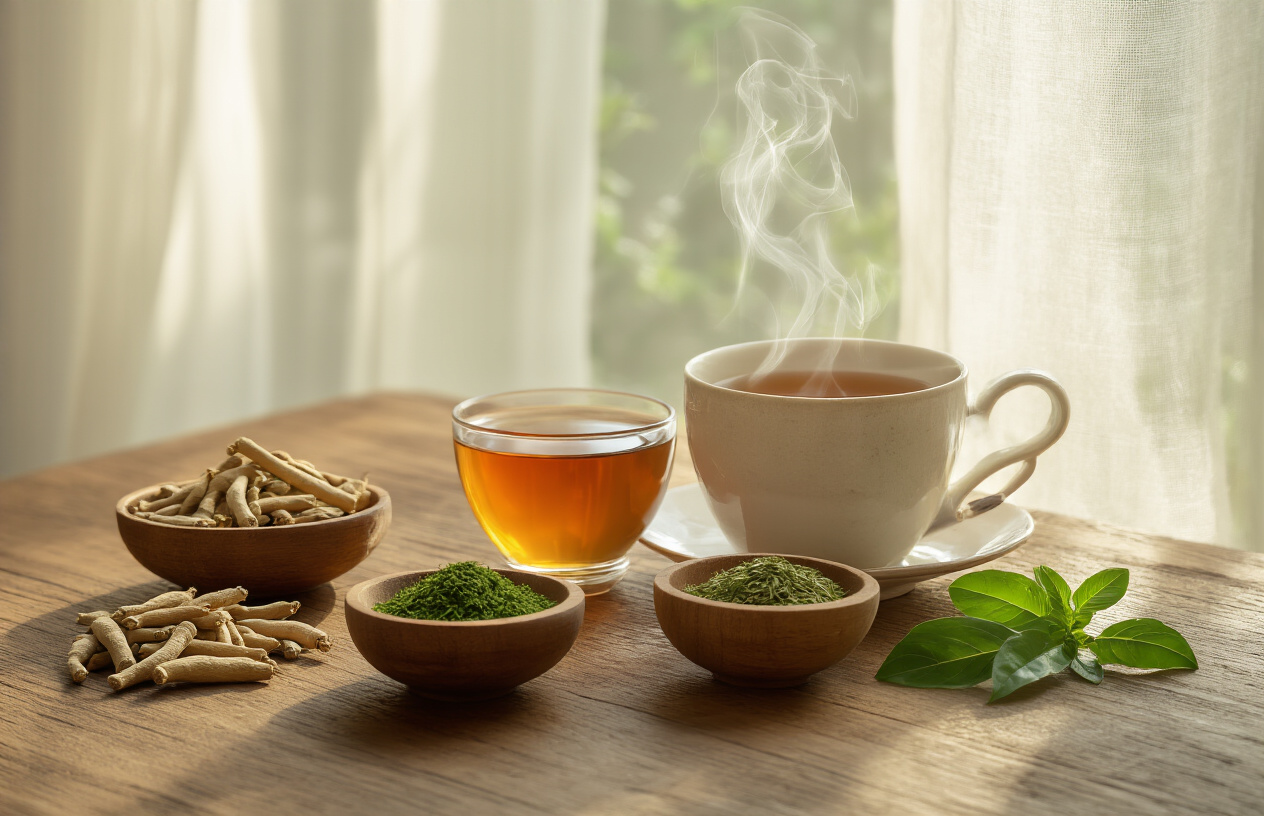
Ashwagandha: The Stress-Fighting Adaptogen
Ever been so stressed you can’t think straight? That’s when ashwagandha steps in like that reliable friend who always has your back. This powerful root has been calming frazzled nerves for over 3,000 years in Ayurveda.
What makes it special? It’s an adaptogen – meaning it literally helps your body adapt to stress. When cortisol (that pesky stress hormone) goes through the roof, ashwagandha gently brings it back down.
I started taking ashwagandha powder in warm milk before bed, and within two weeks, that constant tension in my shoulders? Gone. My sleep improved too.
Studies show it can cut anxiety scores by up to 56%. That’s huge. And unlike many prescription meds, it won’t leave you feeling like a zombie.
Holy Basil (Tulsi): Nature’s Tranquilizer
Tulsi isn’t just another herb – it’s “The Incomparable One” in Sanskrit. Pretty bold name, right? But it lives up to the hype.
This aromatic plant balances your mind in ways that feel almost magical. A cup of tulsi tea during a hectic workday can turn things around in 15 minutes flat.
The secret lies in its eugenol content, which soothes your nervous system while boosting your mood. Think of it as pressing a reset button on your stress response.
I keep a tulsi plant in my kitchen window. When life gets overwhelming, I pluck a few leaves, crush them between my fingers, and just breathe in that calming scent.
Brahmi: Boosting Brain Function and Reducing Anxiety
Brahmi (or Bacopa monnieri) is the multitasker of Ayurvedic herbs. It doesn’t just calm you down – it sharpens your mind while doing it.
Ancient texts called it the herb that gives “knowledge of Supreme Reality.” Dramatic? Maybe. But after using it for a month, I get why they were so impressed.
Brahmi increases serotonin production – that feel-good brain chemical we all need more of. But what’s really cool is how it improves memory and concentration at the same time.
My favorite way to use it? Brahmi-infused coconut oil massaged into the scalp before bed. Talk about peaceful sleep!
Jatamansi: The Natural Sedative
Think of jatamansi as valerian root’s more sophisticated cousin. This Himalayan herb has been the go-to natural sleep aid in Ayurvedic medicine for centuries.
When nothing else works for insomnia, jatamansi often does the trick. It contains over 17 compounds that specifically target your nervous system to promote deep relaxation.
What separates it from synthetic sleep aids? You wake up feeling refreshed, not groggy. It’s gentle yet effective – the perfect combination.
A pinch of jatamansi powder in warm almond milk about 30 minutes before bed can transform your sleep quality. Your mind quiets down, your body relaxes, and before you know it, you’re drifting off.
Healing Ayurvedic Teas for Daily Stress Relief
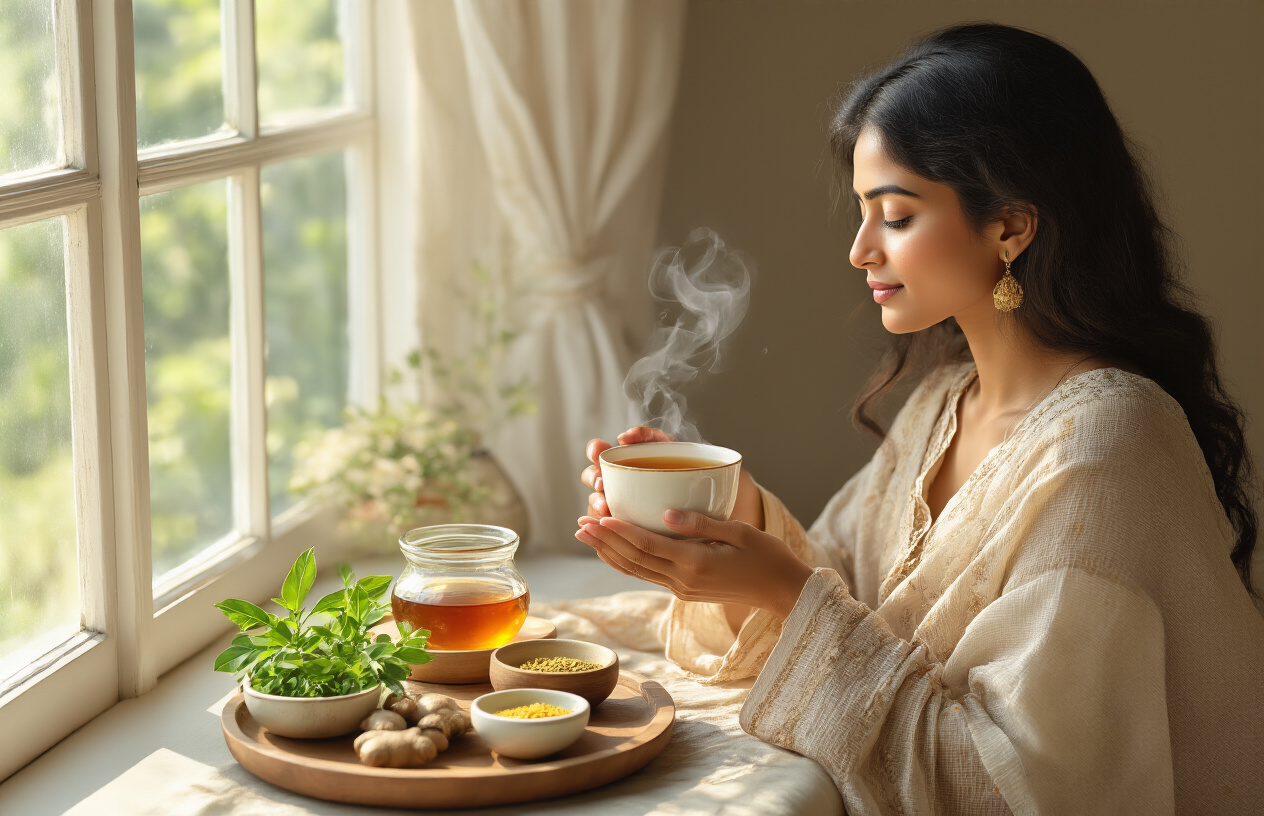
Warming Spiced Chai for Grounding
When life gets chaotic, nothing centers you quite like a cup of warming spiced chai. This Ayurvedic powerhouse isn’t just delicious—it’s literally medicine in a mug.
Traditional chai combines black tea with grounding spices like cardamom, cinnamon, ginger, cloves, and black pepper. These aren’t random additions. Each spice works to balance your nervous system while boosting circulation.
Feeling scattered and anxious? The earthy taste of cardamom pods anchors your energy while cinnamon naturally stabilizes blood sugar (those spikes can trigger anxiety—who knew?).
Make it authentic by simmering the spices in water first, then adding milk (dairy or plant-based) and tea. The fat in milk helps your body absorb the beneficial compounds better than water alone.
Pro tip: Add a pinch of nutmeg when you’re feeling particularly frazzled. It’s nature’s mild sedative.
Calming Chamomile and Rose Blend
This isn’t your average flowery tea. The chamomile-rose combo is serious business for stress relief.
Chamomile contains apigenin, which binds to the same brain receptors as anti-anxiety medications—without the side effects. Rose petals bring mild sedative properties plus a heavenly aroma that instantly signals your nervous system to chill out.
Brew it strong when you’re dealing with overwhelming emotions. The compounds in this blend help regulate cortisol, that pesky stress hormone that keeps you wired.
Need extra emotional soothing? Add a pinch of saffron. Yes, it’s expensive, but you only need a thread or two for therapeutic effects on mood.
Cooling Mint and Coriander Tea for Overheated Minds
When your thoughts are racing at 100 mph and your mind feels like it’s burning up, this cooling combo is your rescue remedy.
In Ayurveda, an overactive mind is often linked to excess “pitta” (fire element). Mint and coriander both have cooling properties that literally take the heat out of your mental state.
Peppermint contains menthol that relaxes tense muscles—including those in your head causing tension headaches from stress. Coriander seeds add a citrusy note while helping flush toxins that accumulate when you’re stressed.
This blend works wonders during summer months or whenever you feel mentally “inflamed” with worry or irritability.
Steep fresh mint leaves with crushed coriander seeds, add a squeeze of lime, and watch your mental temperature drop.
Licorice and Fennel Digestive Calmer
Your gut and brain are constantly chatting. When one’s upset, the other feels it. That’s why digestive teas can be surprisingly effective stress-busters.
Licorice root tea soothes the digestive tract while supporting your adrenal glands—those tiny organs that get hammered when you’re stressed. The natural sweetness satisfies cravings without spiking blood sugar.
Fennel seeds add a licorice-like kick while reducing bloating and cramping that often accompany anxiety. Together, they’re the dynamic duo for stress that manifests in your digestive system.
Sip this blend after meals or whenever you feel that characteristic knot in your stomach from worry.
Nighttime Sleep-Promoting Blends
Sleep and stress are mortal enemies. Tackle insomnia with these Ayurvedic nightcaps that signal your body it’s time to power down.
Ashwagandha root steeped with a bit of nutmeg creates a potent sleep tonic. Add valerian root for particularly stubborn cases of stress-induced insomnia.
Brahmi (bacopa) tea supports your nervous system while clearing the mental chatter that keeps you awake. Pair it with skullcap for a one-two punch against racing thoughts.
The timing matters as much as the ingredients. Start sipping these blends an hour before bed, creating a wind-down ritual your body will recognize as the prelude to deep, restorative sleep.
Creating Your Personalized Ayurvedic Stress-Relief Routine
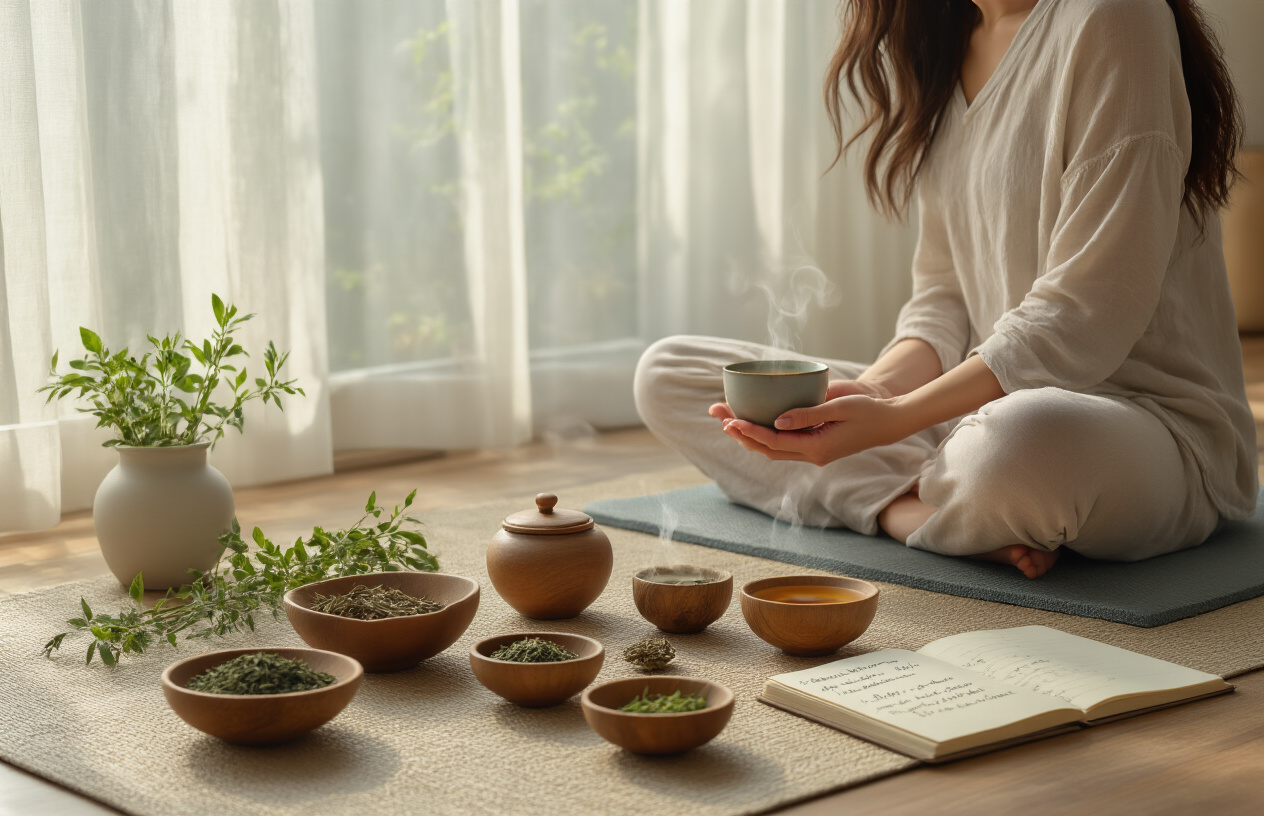
A. Determining Your Dosha Type for Targeted Relief
Ever notice how some people bounce back from stress while others get stuck in it? That’s because we’re all wired differently, and Ayurveda gets this.
Your dosha—Vata, Pitta, or Kapha—is basically your stress blueprint. Here’s a quick way to spot yours:
- Vata: You’re always on the move, mind racing, sleep’s a struggle
- Pitta: Irritable when stressed, perfectionist tendencies, runs hot
- Kapha: Slow to anger but holds grudges, emotional eating, needs motivation
Not sure? Try this: think about how you react when someone cuts you off in traffic. Vatas get anxious, Pittas get angry, Kaphas shrug it off (but remember it).
B. Morning Rituals to Prevent Stress Buildup
The morning sets your entire day’s tone. Skip the email-checking-before-feet-hit-floor routine.
Start with:
- Tongue scraping (sounds weird, works wonders)
- Warm lemon water (wakes up digestion)
- 5 minutes of breathing (yes, just breathing)
Vata types: Add abhyanga (self-massage) with warm sesame oil
Pitta types: Try rose water face spray and coconut oil massage
Kapha types: Dry brushing followed by a brisk walk
C. Evening Practices for Deep Relaxation
Your evening routine is where the magic happens for stress relief.
Try these:
- Power down screens 90 minutes before bed (your sleep will thank you)
- Foot massage with warm oil (works better than a sleeping pill)
- Tulsi or chamomile tea (nature’s chill pill)
For Vatas: Add nutmeg to warm milk
For Pittas: Try cooling mint or rose tea
For Kaphas: Ginger and cinnamon tea gets things moving
D. Seasonal Adjustments for Optimal Balance
Your stress-relief needs change with the seasons. Winter brings Vata stress (anxiety, insomnia), summer amplifies Pitta issues (irritability), and spring stirs up Kapha (lethargy, attachment).
Seasonal switches:
- Winter: Heavier oils, warming herbs, consistent routine
- Summer: Cooling foods, moonlight walks, afternoon meditation
- Spring: Spicy teas, movement practices, lighter foods
The most overlooked seasonal tip? Adjusting your bedtime. Earlier in winter, slightly later in summer. Your body craves this rhythm even if your Netflix queue doesn’t.
Complementary Ayurvedic Practices for Enhanced Results
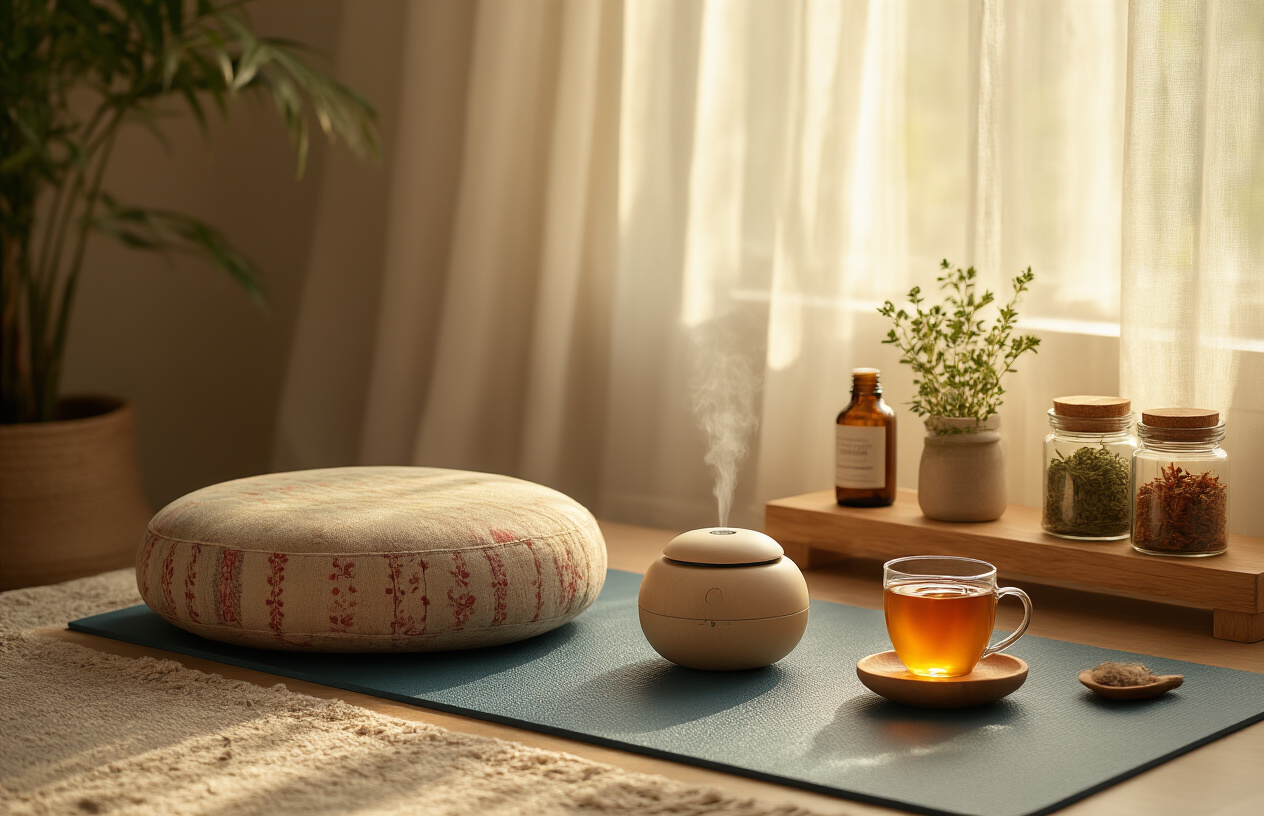
A. Breathwork (Pranayama) Techniques
Those herbs and teas work wonders, but pair them with some focused breathing? Now we’re talking serious stress relief.
Start with simple Nadi Shodhana (alternate nostril breathing). Close your right nostril with your thumb, inhale through your left, then close the left with your ring finger, release your thumb, and exhale through the right. Reverse and repeat. Five minutes daily can dramatically calm your nervous system.
For quick anxiety relief, try Bhramari (bee breath). Just inhale deeply, then hum like a bee while exhaling. The vibration instantly soothes your mind. Do this 5-7 times when stress hits.
B. Simple Meditation Practices
Meditation doesn’t need to be complicated. Start with just 5 minutes of sitting quietly.
Try this: Place a drop of calming essential oil (like lavender) on your palm. Rub your hands together, cup them over your nose, and breathe deeply. Now close your eyes and just notice your breath. When thoughts come—and they will—just label them “thinking” and return to your breath.
Can’t sit still? Walking meditation works too. Move slowly, feeling each step connect with the earth. Match your breath to your movement.
C. Self-Massage (Abhyanga) for Nervous System Support
Your skin is your largest organ, and it’s hungry for touch. Daily self-massage with warm sesame or coconut oil can reset your entire nervous system.
Start with your scalp (yes, really!), using fingertips to make small circles. Work down to your face, ears (packed with nerve endings), neck, and shoulders. Even just 5 minutes focusing on these areas can melt tension.
For full-body abhyanga, warm your oil slightly, then use long strokes on limbs and circular motions on joints. The pressure should feel good—not painful.
D. Dietary Adjustments to Support Herb Effectiveness
Your herbs can’t work their magic if your diet’s fighting against them. According to Ayurveda, certain foods are like throwing gasoline on the anxiety fire:
- Caffeine (sorry, coffee lovers)
- Refined sugar
- Processed foods
- Excessive alcohol
Instead, focus on:
- Warm, cooked foods (easier on digestion)
- Sweet potatoes, pumpkin, and squash (grounding)
- Ghee (clarified butter that calms the nervous system)
- Warm milk with nutmeg before bed (nature’s sleeping pill)
Timing matters too. Eat your main meal at lunch when digestion is strongest, and keep dinner light and early.
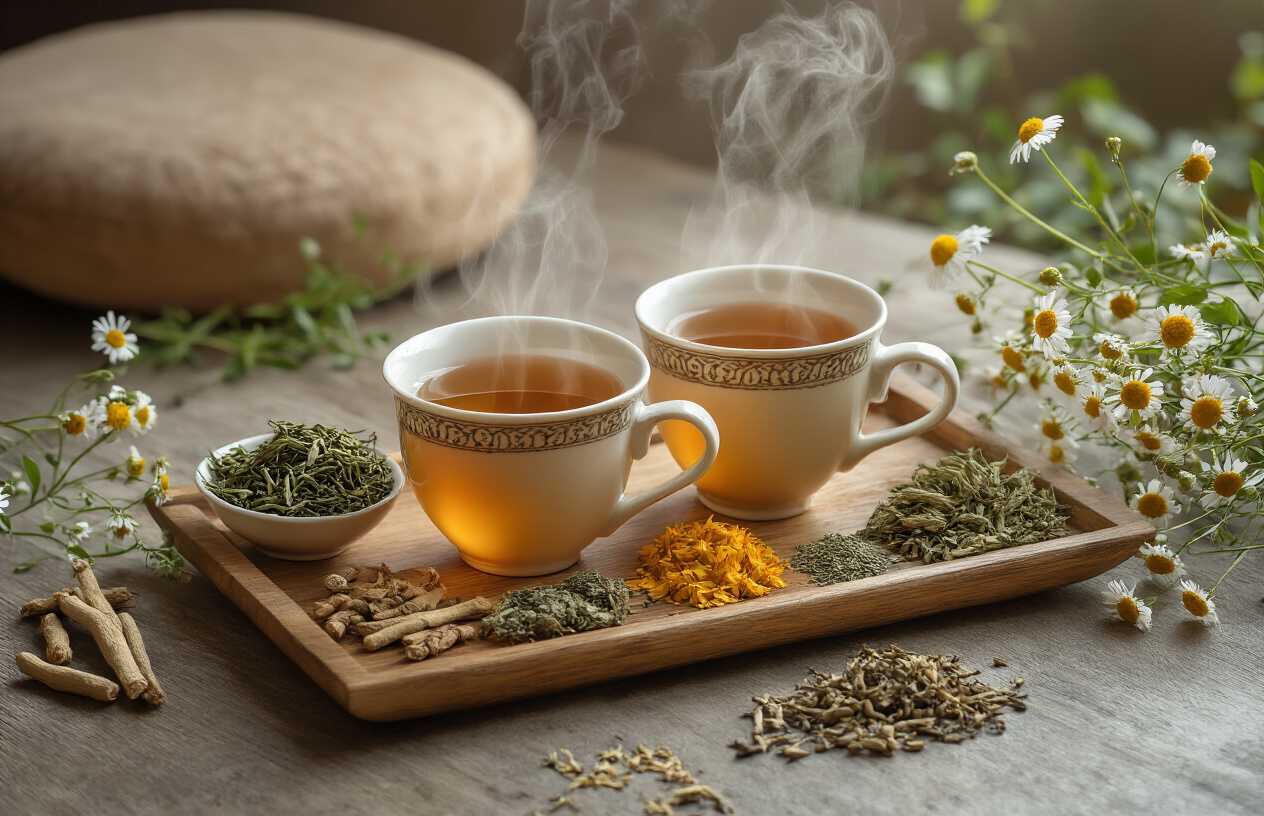
Finding balance in today’s fast-paced world is essential for mental well-being, and Ayurvedic herbs and teas offer natural, time-tested solutions. By incorporating adaptogenic herbs like Ashwagandha, Brahmi, and Holy Basil into your daily routine, you can effectively manage stress while supporting your unique dosha balance. The simple act of brewing and mindfully enjoying calming herbal teas creates moments of tranquility in even the busiest days.
Remember that Ayurveda embraces a holistic approach to wellness. For optimal results, combine your herbal remedies with complementary practices like meditation, gentle yoga, and proper sleep hygiene. Start with small, sustainable changes based on your personal constitution and needs. Your journey to balanced mental health through Ayurveda is unique—trust the process and allow these ancient healing traditions to guide you toward greater peace and resilience.